




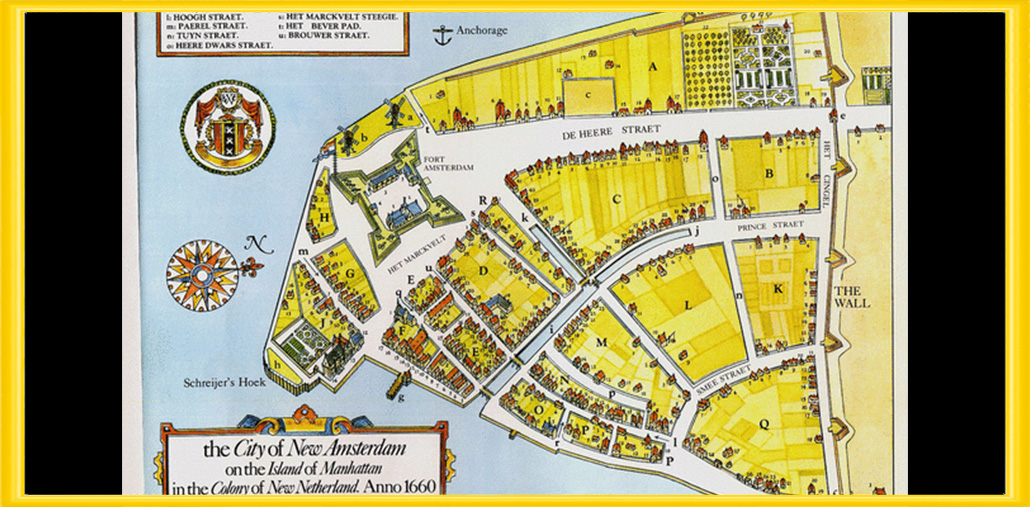
Dutch Governor Peter Stuyvesant handed over New Amsterdam, the capital of New Netherlands, to an English naval squadron under Colonel Richard Nicolas. Stuyvesant hoped to stand up to the English, but he was an unpopular ruler and his Dutch subjects refused to assemble him. After his imprisonment, the name New Amsterdam was changed to New York in honor of the Duke of York, who organized the mission.
The New Netherlands Colony was founded by the Dutch West India Company in 1624 and has grown to include all of present-day New York City and parts of Long Island, Connecticut, and New Jersey. The successful Dutch settlement in the colony grew up on the southern tip of Manhattan Island and was christened New Amsterdam. To legitimize the Dutch claim to New Amsterdam, Dutch Governor Peter Minuit formally bought Manhattan from a local tribe named in 1626. According to legend, the island was occupied by Manhattan – the Algonquin Indians. trinkets worth just $ 24. However, Manhattanians, unaware of European property practices and treaties, were soon wounded in armed conflicts with the expanding Dutch settlement in New Amsterdam. In early 1641, a long war broke out between the colonists and Manhattan, resulting in the deaths of more than 1,000 Indians and immigrants.
In 1664, New Amsterdam came under English control and English and Dutch immigrants lived in peace. In 1673, there was a brief halt to English rule when the Netherlands temporarily withdrew the settlement. In 1674, New York was returned to the English, and in 1686 it became the first city in the colonies to receive a royal charter. It became the first capital of the United States after the American Revolution.
src : https://www.history.com/this-day-in-history/new-amsterdam-becomes-new-york